

news

WEST SIDE STORY
MARIOTTI · MICHIELETTO

1024 1024 Mauro

NEWS
«SOMEWHERE, A PLACE FOR US»

WEST SIDE STORY
Based on an idea by Jerome Robbins
Libretto Arthur Laurents
Music Leonard Bernstein
Lyrics Stephen Sondheim

LES PÊCHEURS DE PERLES
WENDERS AS OPERA DIRECTORS

1024 681 Mauro

NEWS
WIM WENDERS DEBUTS IN MUSICAL THEATRE

LES PÊCHEURS DE PERLES · THE PEARL FISHERS
Libretto Eugène Cormon and Michel Carré
Music Georges Bizet

Conductor Jérémie Rhorer
Choirmaster Lorenzo Fratini
Direction Wim Wenders
Set design David Regehr
Costsmes Montserrat Casanova
Lighting Olaf Freese
Video Donata Wenders, Michael Schackwitz
Dramaturgy Detlef Giese
Orchestra and Chorus of the Maggio Musicale Fiorentino

Italian and English surtitles by Prescott Studio

Florence, Teatro del Maggio
16, 19, 21, 23 September 2025

*

Set in Ceylon (now Sri Lanka), the story tells of the love triangle between the pearl divers Nadir and Zurga and the priestess of Brahma, Léïla. Nadir and Zurga are united by a strong bond of friendship, but conflicts arise due to their shared love for Léïla, since they discover that the priestess is the same woman with whom both men had fallen in love years earlier.

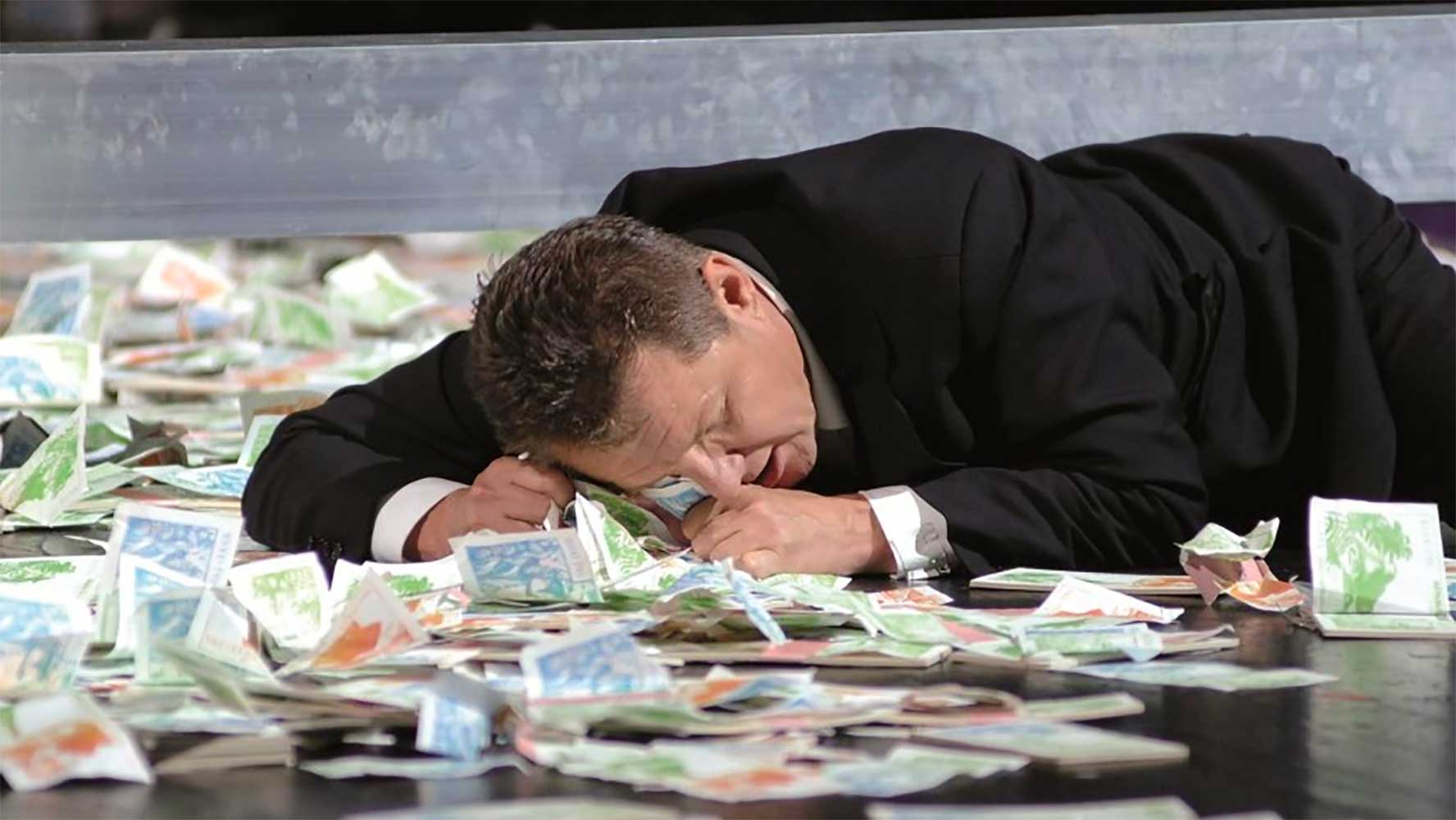
This production of Les pêcheurs de perles, a rare title even in France, was created in 2017 at the Schillertheater in Berlin, a theatre generally dedicated to prose. Since at the time the Staatsoper Unter den Linden was unfit for use due to work being carried out at its historic location, the Schillertheater hosted for seven years the opera house programme. Les pêcheurs de perles was the last production of this long period hosted at the at the Schillertheater .

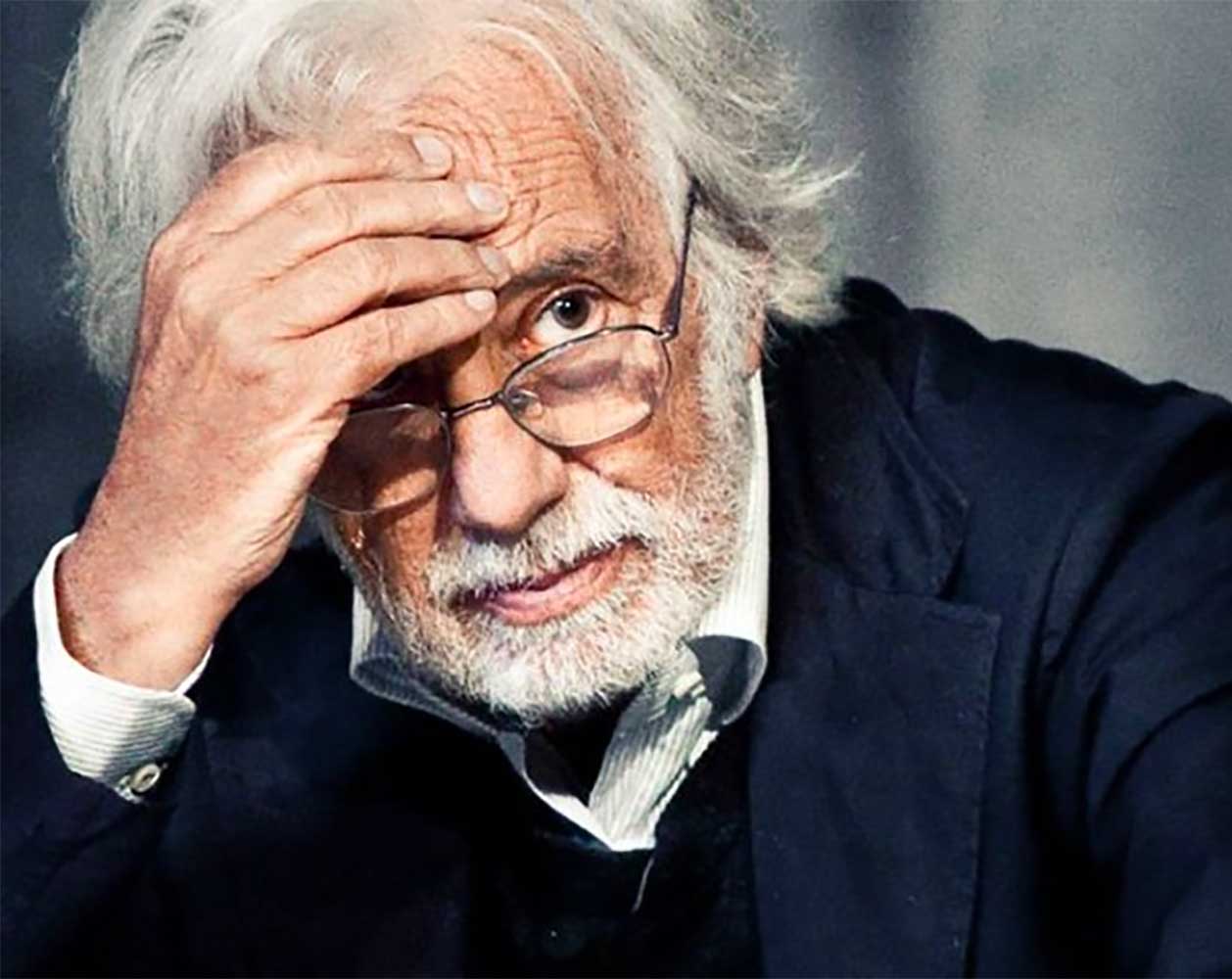
The initiative came from an invitation to collaborate from Daniel Barenboim, former director of the Staatsoper, to his friend Wim Wenders. The latter proposed this opera by the young Bizet (1863) because the Nadir-Zurga duet and Nadir’s aria had made a lasting impression on him during his youth in California.

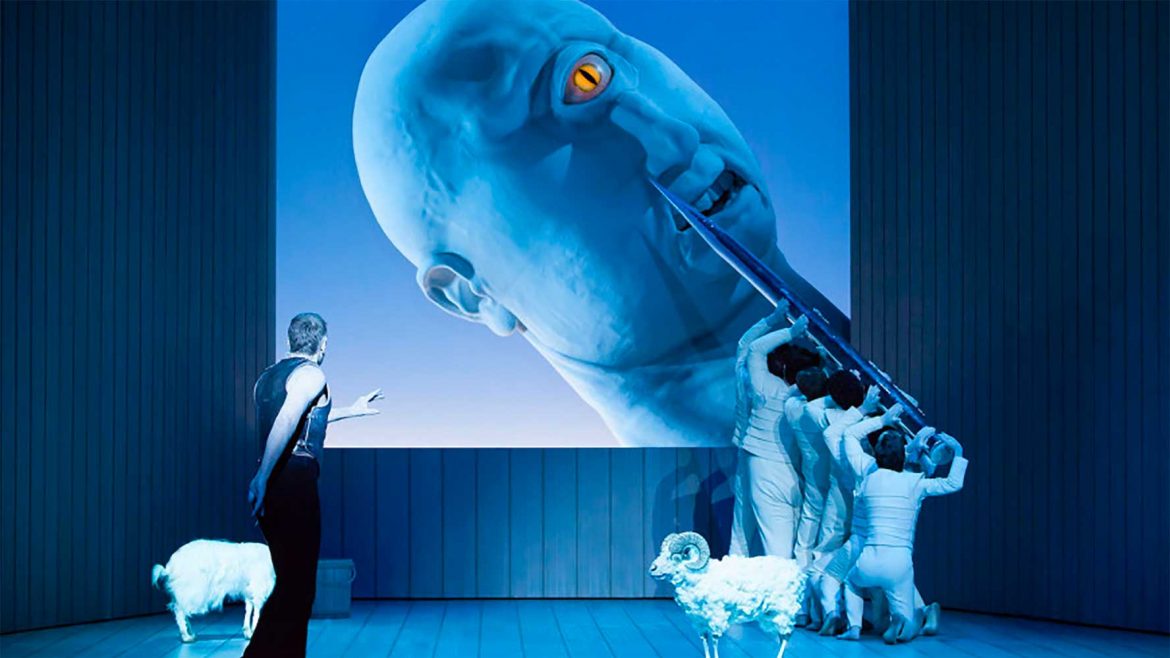
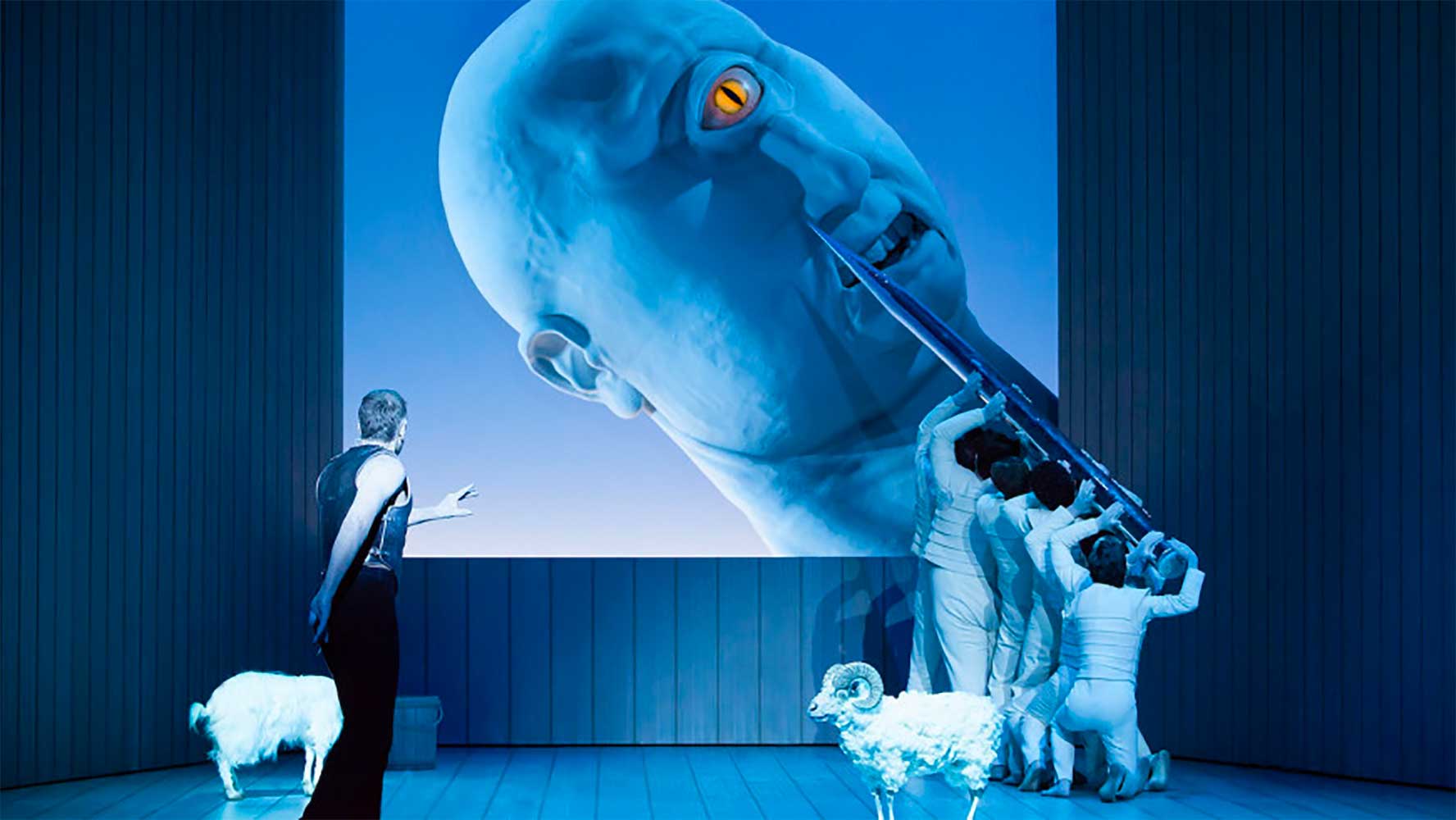
Wenders moves with great elegance and discretion in a context potentially rich in visual pitfalls, those of a superficial and ornamental exoticism. The scene is bare, shadowy but not gloomy, costumes prove to be timeless, the projections are evocative — a universe of solemn simplicity, not without a conscious naivety drawn from the fundamentals of opera.

«Of course, we are at the antipodes of regietheater», writes Guy Cherquiall the day after the premiere in Berlin: «Wenders does not offer a dramaturgical direction, but an aesthetic one; Wenders does not offer an interpretation, but only a system of evocations that is not naturalistic, yet somewhat faded, of bygone times, always avoiding that realism which in this case would be out of place. In this abstract landscape, each character is not what they seem; and the drama’s challenge is to work on being and appearance, on the subtle texture of friendships and rivalries, in which Zurga seems to be the most complex character, but also the most mature, consistent and profound».


GIULIO CESARE IN EGITTO
MONTANARI · MICHIELETTO

1024 652 Mauro

NEWS
BETWEEN HISTORY AND AFFECTIONS

GIULIO CESARE IN EGYPT
Libretto Nicola Francesco Haym
after Giacomo Francesco Bussani
Music Georg Friedrich Händel

Conductor Stefano Montanari
Director Damiano Michieletto
Set design Paolo Fantin
Costumes Agostino Cavalca
Lighting Alessandro Carletti
Orchestra of the Teatro Petruzzelli in Bari

Bari, Teatro Petruzzelli
September 19, 20, 21, 23, 24, 25, 2025

Production Teatro dell’Opera di Roma
in co-production with
Théâtre des Champs-Élisées
Oper Leipzig
Opéra Orchestre National de Montpellier-Occitanie
Capitole de Toulouse

Italian and English surtitles by Prescott Studio

*

«A lonely, somewhat clumsy man who can’t seem to get anything right». This is how the director Damiano Michieletto describes the protagonist of Giulio Cesare in Egypt. «It seems that the drama unfolds around Julius Caesar, behind him. Ptolemy aspires to power and plunges into a spiral of cynicism; Cleopatra weaves plots and seductions; Sextus seeks to avenge his father and undergoes a process of generational maturation. In the midst of them, I see Caesar as almost a spectator, as if everything he had to achieve (conquests, glory, victories) were stages already completed on his journey. Händel portrays a man who is already old, and in historical reality he will die a few years after the events narrated in the opera, shortly after returning to Rome. He will suffer a conspiracy and betrayal, the same treatment reserved for Pompey at the beginning of the opera. In fact, Handel’s Julius Caesar is a drama about destiny, symbolized on stage by a trio of Fates who envelop the protagonist with their red threads and determine the length of his life. It is an opera in which the premonitions of death loom large, which the Roman general’s frivolous actions seem to want to ward off».

THE TURN OF THE SCREW
GLASSBER · WARNER

1024 916 Mauro

NEWS
THE CERIMONY OF INNOCENCE

THE TURN OF THE SCREW
Libretto Myfanwy Piper
from the novel of the same name by Henry James
Music Benjamin Britten

Deborah Warner

Conductor Ben Glassberg
Direction Deborah Warner
Set design Justin Nardella
Costumes Luca Costigliolo
Lighting Jean Kalman
Mimic movements Joanna O’Keeffe
Orchestra of the Teatro dell’Opera di Roma
With Ian Bostridge as Quint

New staging of the Rome Opera House
Italian and English surtitles by Prescott Studio

Rome, Teatro Costanzi
19, 23, 25, 27, 28 September 2025

*

Lost souls in a labyrinth of desire
by Edward Seckerson
Warner’s first production of «The Turn of the Screw»
London, Barbican Centre, 1997 – Excerpt

[…] The kiss which Peter Quint tenderly plants on the forehead of the dying boy Miles in the closing moments of Deborah Warner’s new production of Benjamin Britten’s The Turn of the Screw will of course be misconstrued by those who insist upon trawling through the composer’s private life in search of contemporary answers to this opera’s many questions. To others, it will come as a benediction, a fond but chaste farewell to innocence, to youth, to life and love misspent. Warner has a lot – a whole lot – to answer for. Which is precisely why her production is so intriguing. And compelling. And provocative by virtue of not being provocative. Ambiguous without striving to be. Scary because it’s ambiguous. Like Henry James. Warner doesn’t run from the uncomfortable questions that this story poses, nor does she underline or seek to answer them. She torments us with them. And that is scary.
So what are those questions, and why do they unsettle us? What exactly was the relationship between Quint and the previous governess, Miss Jessel? How exactly did Quint «make free» with Miles? Were Quint and Jessel simply the unacceptable face of permissiveness and promiscuity, robbing their young charges of their innocence, awakening in them the first stirrings of puberty? Could be. Such things were not spoken about, let alone flaunted, in the England of James’s novella. […]
It’s the “could-bes” of this staging that make it so intriguing. The world we enter, a dead, dread space […], appears like some sort of halfway house between this world and the next. The tall, thin, louche figure [of Quint], who silently makes his way through the darkness, from a door upstage to the incongruous grand piano downstage, belongs here. Indeed, it is as if the real “visitors” to this story are the living, not the dead, come to confront their fears, their prejudices, their desires. So the “ghosts” move freely, casually, through this environment, shadowing, “parenting” the children (whose own sense of reality is unhindered) while their protectors look on. Quint is no longer just a shadowy figure, but in the room with the Governess, vindictively knocking over a vase of flowers in order to make his presence, his displeasure, felt. He helps even make up Miles’s bed […]. And he is sung – wonderfully and with immaculate diction – by Ian Bostridge, who succeeds in making Britten’s aching melismas (free and adventurous as Quint is wont to be) at once beautiful and subversive (all those near quartertones). Physically, he is an adornment, draping himself around the production.

MACBETH · VERDI
SODDY · MARTONE · PALADINO

1024 1024 Mauro

NEWS
«LIFE… WHAT DOES IT MATTER?»

MACBETH
Libretto Francesco Maria Piave
after William Shakespeare
Music Giuseppe Verdi

Conductor Alexander Soddy
Choirmaster Lorenzo Fratini
Direction Mario Martone
Set design Mimmo Paladino
Costumes Ursula Patzak
Lighting Pasquale Mari
Video Alessandro Papa
Coreography Raffaella Giordano
Orchestra and Chorus of the Maggio Musicale Fiorentino
With Luca Salsi as Macbeth

Florence, Teatro del Maggio
12, 14, 17, 19 October 2025

New production
Italian and English surtitles by Prescott Studio

*

SHAKESPEARE
THE TRAGEDY OF MACBETH
ACT I – SCENE I
A desert place. Thunder and lightning. Enter three Witches.
FIRST WITCH
When shall we three meet again
In thunder, lightning, or in rain?
SECOND WITCH
When the hurly-burly’s done,
When the battle’s lost and won.
THIRD WITCH
That will be ere the set of sun.
FIRST WITCH
Where the place?
SECOND WITCH
Upon the heath.
THIRD WITCH
There to meet with Macbeth.
FIRST WITCH
I come, Graymalkin!
SECOND WITCH
Paddock calls.
THIRD WITCH
Anon.
ALL
Fair is foul, and foul is fair.
Hover through the fog and filthy air.
Exeunt.

GOLDONI · ARLECCHINO · STREHLER

616 610 Mauro

NEWS

A 78-YEAR-OLD TEENAGER

«ARLECCHINO, THE SERVANT OF TWO MASTERS»
by Carlo Goldoni

Direction Giorgio Strehler
resumed by Stefano de Luca
Set design Ezio Frigerio
Costumes by Franca Squarciapino
Music Fiorenzo Carpi
Lighting Claudio De Pace
Mimic movements Marise Flach

Milan, Teatro Grassi
23, 24, 25, 26, 28, 29, 30 October, 1, 2 November 2025

Produced by Piccolo Teatro di Milano · Teatro d’Europa
Italian and English surtitles by Prescott Studio (25, 26.10)

*
«Arlecchino» comes back home to via Rovello
From the presentation notes of Piccolo Teatro in Milan

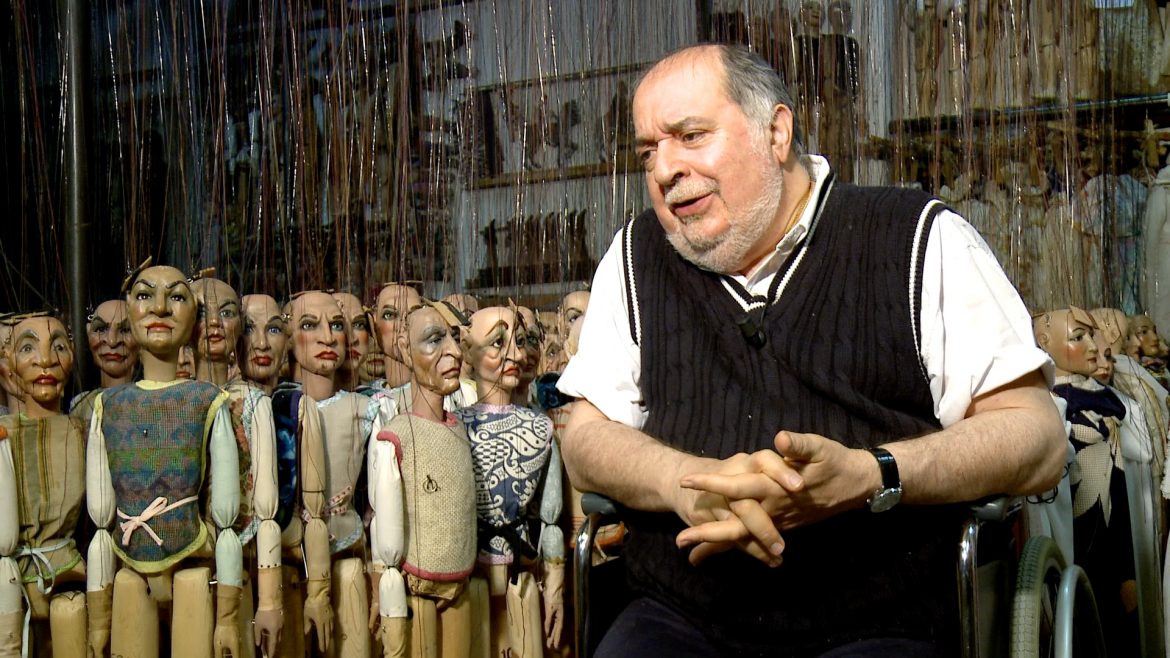
«Arlecchino by Giorgio Strehler, with sets by Ezio Frigerio and costumes by Franca Squarciapino, comes back home in Via Rovello» The most-seen Italian play in the world will be performed by young actors from the Piccolo School of Theatre. They are mentored by the director Stefano de Luca who, together with Enrico Bonavera, third actor playing the role of Arlecchino, has introduced them to the secrets of Goldoni and Strehler’s theatre. The result is a play that is both ancient and timeless, that – with a blend of fun and ritual, memory and future – tells an everlasting tale of lovers, of parents and children, of masters and servants, of love and death, together with duels, mistaken identities, laughter and the poignant awareness of time passing. […]
Arlecchino is a play that also proves to be an idealistic passing of the baton between generations of artists since the company staging the play is characterised by actors born between the late 1990s and the early 2000s. This highlights the leading role of the Piccolo Theatre School in drama education and in transmitting to students theoretical knowledge as well as stage secrets».


DON GIOVANNI · MOZART · FISCHER

530 532 Mauro

NEWS

«CAN’T YOU SEE I JUST WANT TO HAVE FUN?»

DON GIOVANNI
Libretto Lorenzo Da Ponte
Music Wolfgang Amadeus Mozart

Conductor Iván Fischer
Director Iván Fischer
Set and lighting Andrea Tocchio
Costumes Anna Biagiotti
Budapest Festival Orchestra
Dance Ensemble Iván Fischer Opera Company

Production
Iván Fisher Opera Company
Budapest Festival Orchestra
Müpa Budapest
Vicenza Opera Festival

Italian and English surtitles by Prescott Studio

Vicenza, Teatro Olimpico
30 October, 1, 2 November 2025

*

The myth of Don Giovanni
by Pietro Citati [2011, excerpt]

[…] The secret of Don Giovanni lies in a word that he repeats insatiably, furiously, frantically, as if he wanted to dig it out, bringing its content to light. «Can’t you see that I just want to have fun?» […] What is the real meaning of these words: to have fun? Although Don Giovanni is not bent to […] reflection, he knows, unconsciously, that [to have fun] includes many things, which may be partly unknown to him, but for which he knows he possesses «a talented vocation». […] Having fun means increasing the rhythm and speed of life almost to the point of madness; not lingering for even a moment in one place or another, because somewhere else you always have more fun; living only in the present, or in that moment of the future that moves immediately after the present instant; […]; going through all the phases and shadows of every passion, from fury to sweetness and from sweetness to fury […]; neither design nor plan nor predict, or anticipate, but just desire, rejoice, enjoy, possess, and then abandon, and then desire and rejoice again, because pleasure is this never-ending and highly fluid fusion of desire, possession, and abandonment. […]
But [Don Giovanni] will not be overwhelmed by earthly things, which he adores, only by heavenly and infernal things, which bore him or do not interest him at all.

  • 1
  • 2